Call Us Mon-Fri from 7:30 am-6:30 pm or Saturday-Sunday: 9:00 am–2:00 pm 508-203-6966
Call Us Mon-Fri from 7:30 am-6:30 pm or Saturday-Sunday: 9:00 am–2:00 pm 508-203-6966
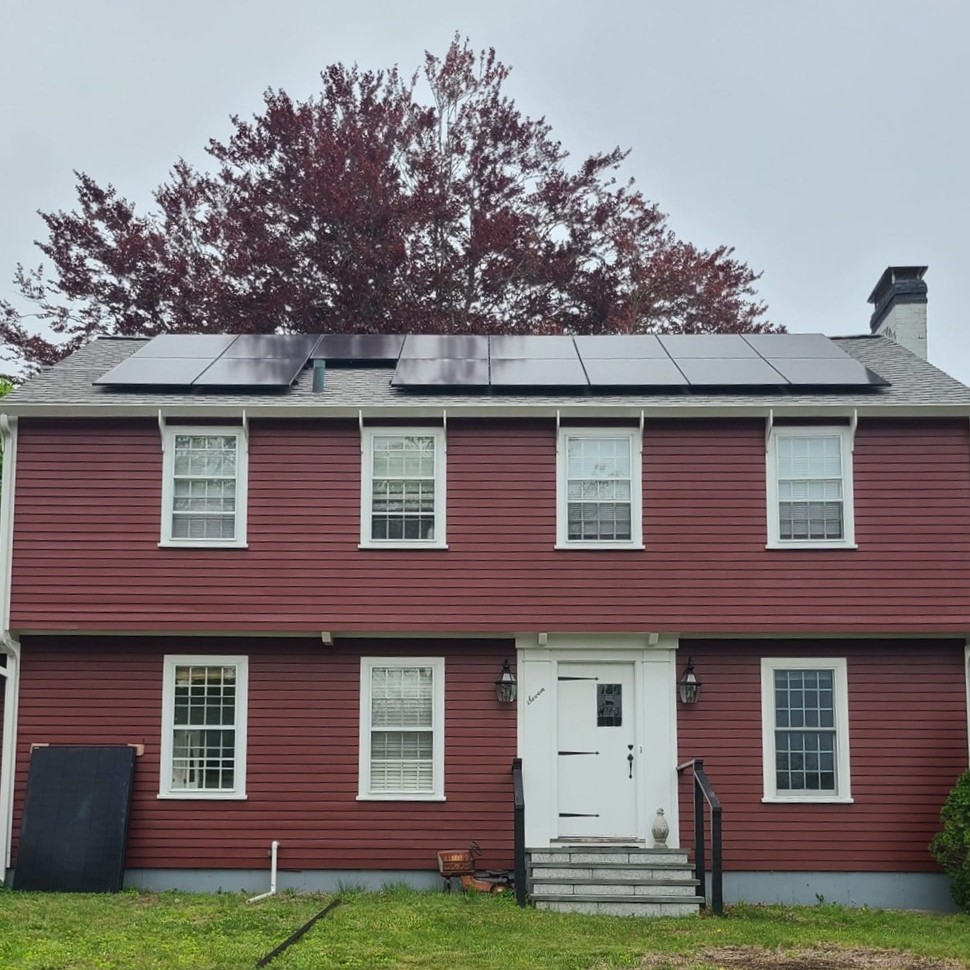
This article will examine a solar roof by Whaling City Solar in Marion, Massachusetts. This 26-panel build was completed just steps from the beautiful Marion Harbor. It’s location gave us a great excuse to stop by Fieldstone Market for some goodies.
The average U.S. household uses somewhere between 8,000 and 14,000 kilowatt hours a year. New Englanders, historically, have been on the lower end due to using gas for heating, and our wonderful regularly open window spring, summer, and fall weather.
However, this electricity usage pattern is changing as many of us install heat pumps, buy electric cars, and find temperatures getting a little warmer – meaning a lot more electric heating, and a bit more cooling and dehumidifying.
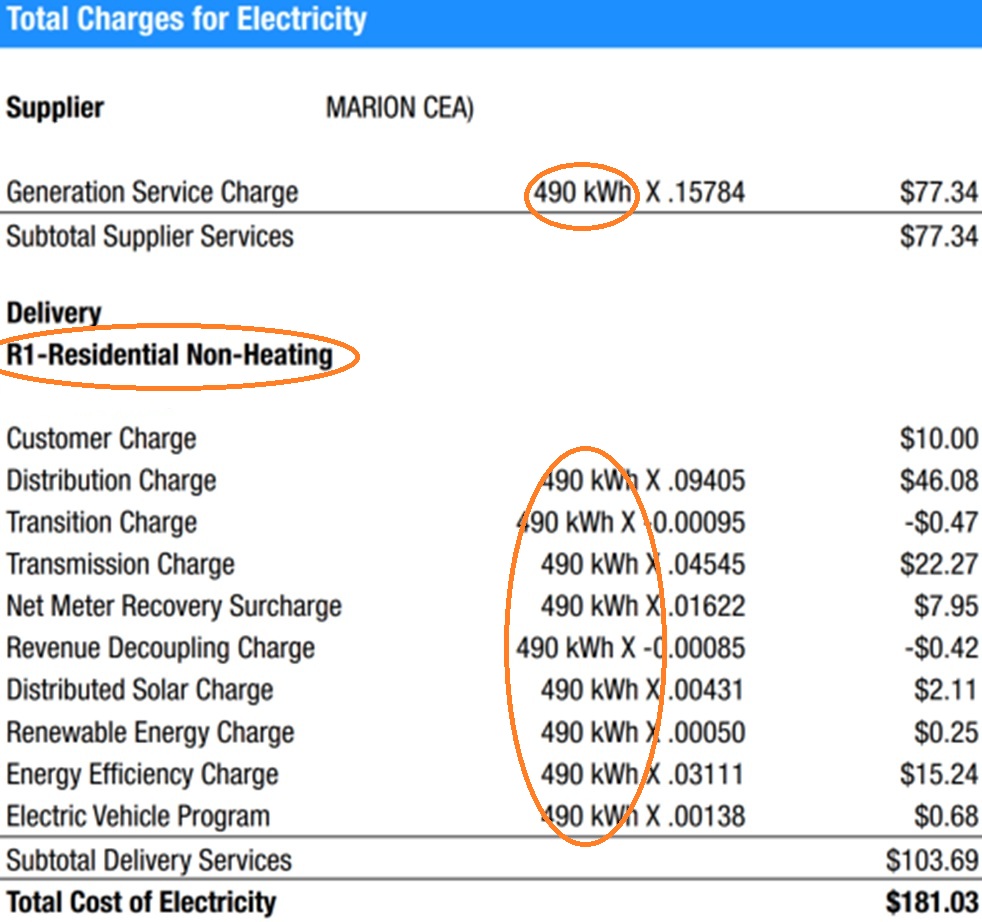
The image to the right is cut from an Eversource electricity bill, and looks like that of most “”R1” home owners on the South Coast of Massachusetts. There may be some differences, like electricity generation supplier, but most folks are structurally the same.
All of the “kWh” items – almost the whole bill – can be offset with solar power (and a battery technically). The $10 a month customer charge cannot be offset.
Solar power without a battery, in order to offset all energy usage, must make use of “net metering“. This means extra daytime solar electricity is measured by the electric meter, as it leaves the house. Later at night, the electric company nets this extra electricity out. They do charge though.
The charge is that they don’t offset any of the efficiency, net metering, or renewable programs.
That means, roughly the first half of the bill has everything offset, while the second half of the bill has about 85% of it offset. When accounting for the $10 default charge, that means about 87% offset in total.
The reality is, in New England, almost all solar needs the power grid, and net metering, to get through the winter time, unless you greatly oversize your solar power systems for the summer months.
If you’re interested in seeing how we did the math above, and to talk about how your home’s variables might be slightly different, reach out to Whaling City Solar.

Jinko Eagles are an intense match for coastal conditions. Its high-efficiency half-cell and multi-busbar design deliver impressive energy output while taking up minimal roof space, making it practical for residential installations. The bifacial cell technology captures additional light from the back side of the panel, offering a power boost that adds value over the system’s lifetime.
Jinko is one of the world’s largest solar panel manufacturers, investing significantly in research and development. They’re also part of a growing group investing time researching cutting edge solar panels like perovskites.
This panel’s design is well-suited to New England’s seasonal extremes. Thanks to its twin-array layout, the panel continues producing power even when part of it is shaded, whether by nearby trees or coastal debris blown in by nor’easters. Built to handle salt air, humidity, wind, and snow, it’s a reliable choice for waterfront homes like this one. A 30-year linear power warranty provides added peace of mind for the long term.
The Snap N Rack Ultra Rail system is a single rail design incorporating SnapNrack’s lightweight UR-45 rail. Aesthetics are not sacrificed for build quality either; the rail is designed to incorporate the running of wires within it, and with its specialized end clamps and end caps, the mounting system is invisible beneath the array, resulting in a clean, low-profile presence on your roof.
The rail is made of 6000 series aluminum, and the accompanying hardware is stainless steel and aluminum flashings. The options for the finish are the default black anodization or mill finish on the rail, while the hardware can be coated clear or black. Wind loads are 110-190mph, and snow loads are 0-120psf. The SnapNrack system feels at home on any roof, working with a pitch range of 0-90 degrees.
The SolarEdge SE10000H inverter revolutionizes traditional solar inverters with its innovative power conversion technology, which uses distributed switching and powerful DSP processing to synthesize a clean sine wave. This design significantly reduces the need for heavy magnetics and cooling elements, resulting in a lighter, more compact inverter that simplifies shipping, storage, and one-person installation.
Interested in going solar? Contact us or call 508-203-6966 for a free consultation today!