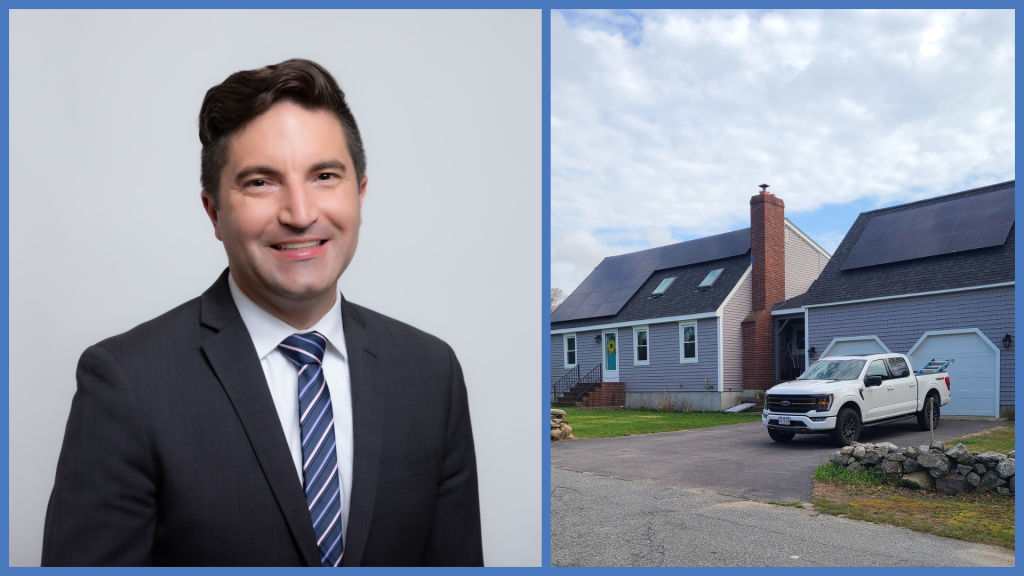
In a previous article, we wrote about two Massachusetts solar policy proposals introduced in the Statehouse: Bill SD.2488 by State Senator Jamie Elbridge and Bill HD.4155 by State Representative Jack Lewis. We are lucky enough for Rep. Lewis to have generously lent us his time for an interview:
Streamlining Solar Permitting
Dan: Your bill aims to significantly speed up the solar permitting process in Massachusetts. What is the biggest challenge in getting municipalities to adopt an automated permitting system by 2027, and how do you plan to ensure compliance? Was this inspired by how permitting is done in places like Australia or Germany?
Rep. Lewis: The biggest challenge is probably a reliance on the status quo. Reaching our rooftop solar potential will mean a considerable increase in the number of permit applications, and jurisdictions will need to make adjustments. Some municipalities may lack the technical infrastructure or personnel to implement or pursue this. There could be cost concerns with bringing tech up to current standards and resources required to continue with an automated permit system, which is why our legislation limits adoption to larger municipalities for the time being.
In recent years, hundreds of jurisdictions nationwide have signed up for automated permitting, constituting approximately one-third of the market. However, not a single jurisdiction in Massachusetts employs automated permitting that I know of. In California, which passed an automated permitting mandate in 2022, compliance is very high due to a robust compliance campaign run by the state energy office and community organizations. If the legislation were to pass in Massachusetts, we hope similar compliance efforts could be replicated here. Yes, in countries like Australia and Germany that have largely eliminated permitting barriers, the cost of solar is less than half the cost here.
Impact on Homeowners
Dan: How do you expect the streamlined permitting and interconnection processes to affect homeowners in cities like New Bedford?
Rep. Lewis: Automated permitting would allow homes to receive solar permits instantly, which would allow more solar to be installed on a faster timeline and at a lower cost.
Future of Distributed Energy Resources (DERs)
Dan: Beyond permitting, what other legislative initiatives would you like to see to promote the adoption of small-scale solar and battery storage across Massachusetts?
Rep. Lewis: Our Facilitating DER and MOSAIC (Maximizing and Optimizing Small-Scale Assets in Communities) bills lay out several essential provisions that would assist in securing a reliable, affordable, distributed, clean energy future. In addition to the measures we are working to advance (such as making the tax credit refundable for low-income households and enabling microgrids), the Commonwealth can consider policies to advance workforce development specific for distributed solar and storage and working to overcome barriers to adoption, specifically in frontline and EJ communities. Incentives should also be structured to benefit non-residential customers like small businesses, nonprofits, and houses of worship.
Equity Considerations
Dan: Your bill includes tax incentives for low-to-moderate-income households. How do you see this bill helping historically underserved communities benefit from the clean energy transition?
Rep. Lewis: DERs are a tool for energy justice. DERs are the best way to drive clean energy benefits to frontline and low-wealth households. They bring immediate bill savings, local jobs, grid resilience, and cleaner air to neighborhoods hit first and worst by the climate crisis and pollution. Vote Solar is concurrently working on a Clean Energy Equity provision, which, if passed, would provide an additional lens for this measure- it would require that a proportional percentage of our Commonwealth’s clean energy benefits be directed to environmental justice populations.
Virtual Power Plants & Homeowner Participation
Dan: Your bill requires utilities to establish Virtual Power Plants (VPPs). How do you envision homeowners participating in these programs, and what are the most significant incentives for them to join?
Rep. Lewis: In other jurisdictions with robust VPP offerings, we see that monetary compensation is a major incentive. Participants should be fairly compensated for discharging their batteries to the grid when needed. They also save on electricity bills and are protected against the volatility of electric rates, not to mention being a major environmental and grid-stability steward.

Grid Resilience & Cost Savings
Dan: Your bill includes a key component of using VPPs to reduce peak electricity demand. How do you see this benefiting Massachusetts residents, both in terms of reliability and electricity costs?
Rep. Lewis: First, reducing the strain on transmission infrastructure leads to deferred costs and a reduced need for utility capital investments – major cost-savers for ratepayers. Second, VPPs mean increased reliability with a decreased likelihood of brownouts or blackouts and better responsiveness to sudden demand spikes. VPPs also lower wholesale electric prices, meaning that reducing peak demand mitigates the expensive emergency generation costs (think: polar vortex happens in year one, and in year two, rates will increase for cushion system expenses in case it happens again). Major climate and environmental health benefits exist because VPPs mean less reliance on polluting infrastructure.
Long-Term Vision for Massachusetts Solar Policy
Dan: Your bill targets distributed energy resources (DERs) to make up 20% of the state’s electric load by 2035. What steps will be taken beyond this legislation to achieve that goal, and are there any future policies in the pipeline?
Rep. Lewis: DOER’s proposed changes to the SMART program, specifically related to siting and low-income solar access, will be beneficial if adopted. Plus, several other pieces of legislation have been introduced this session that would advance our vision, specifically Rep. Vitolo’s SPARK Act (facilitating solar on new construction when installation costs are lowest) and Rep. Sabadosa & Senator Mark’s solar on disturbed lands bill, which would directly benefit distributed projects.
Thank you again to Representative Jack Lewis. We are always excited to see new bills for renewable energy introduced in Massachusetts.
Interested in going solar? Contact us or call 508-203-6966 for a free consultation today!